Our
Story.
InkLube wasn't built in a lab. It was built on a tattoo bench, after the tenth client in a week complained about the same greasy aftercare cream that made their fresh ink dull on day three.
It Started With a Problem.
Two of us — a tattoo artist and a formulator — were having the same conversation in different cities. The artist was tired of recommending aftercare she didn't believe in. The formulator was tired of seeing aftercare brands sell half-empty jars at premium prices using lifestyle photography and no INCI.
Tattoo aftercare had become a marketing category, not a craft. Every brand was selling the same petrolatum-and-lanolin base in different packaging, and charging $30 for the privilege. Meanwhile artists were quietly telling clients to use whatever generic body lotion was on the bathroom shelf.
So we made the cream we wished existed: 13 ingredients, all of them doing something, all of them on the label, made in small batches by people who tattoo.
The Mission.
Keep Going.
The short version
The InkLube story in one paragraph.
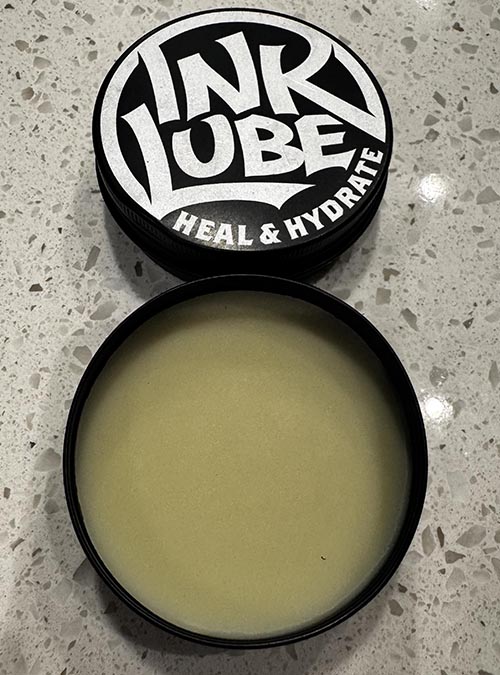
If you only read one part of the InkLube story, read this. Every mainstream tattoo balm on the pharmacy shelf is built around petrolatum, which seals a fresh tattoo completely at exactly the point it needs to breathe. We spent the development time working out what a plant-oil formula had to do to replace it, and then printed all thirteen ingredients on the jar rather than hiding behind "proprietary blend".
The rest of it is unglamorous: small batches, made in the USA, no fragrance because fragrance is a common irritant on skin that has just been through a needle, and no lanolin for the same reason. The full reasoning is in this breakdown, and what ended up in the jar is listed on the FAQ.
If you want the regulatory backdrop to any of this, the FDA fact sheet on tattoos and permanent makeup is the primary source most of our ingredient decisions were checked against.
There is not much more to the InkLube story than that. Two people who were tired of handing clients a petroleum ointment and calling it aftercare, a long stretch of reformulating, and a jar that does the job it claims to. The InkLube story is still short, and we would rather it stayed honest than got interesting.
